Bridal vs. Fashion Jewelry Architecture: Why Your Site Structure Is Failing High-Intent, Long-Cycle Buyers
In the digital jewelry world, the most common trap a business owner can fall into is the “everything-everywhere” approach. If you carry both fashion jewelry and high-end bridal pieces, your website navigation likely treats them as equals.
But from the perspective of consumer psychology, these two buyers are not just different—they are living in different worlds. If you fail to separate their digital experiences, you are inadvertently creating friction that kills conversions for both.
The Two Different Worlds: Impulse vs. Research
To understand why your site structure matters, you must first understand the buyer.
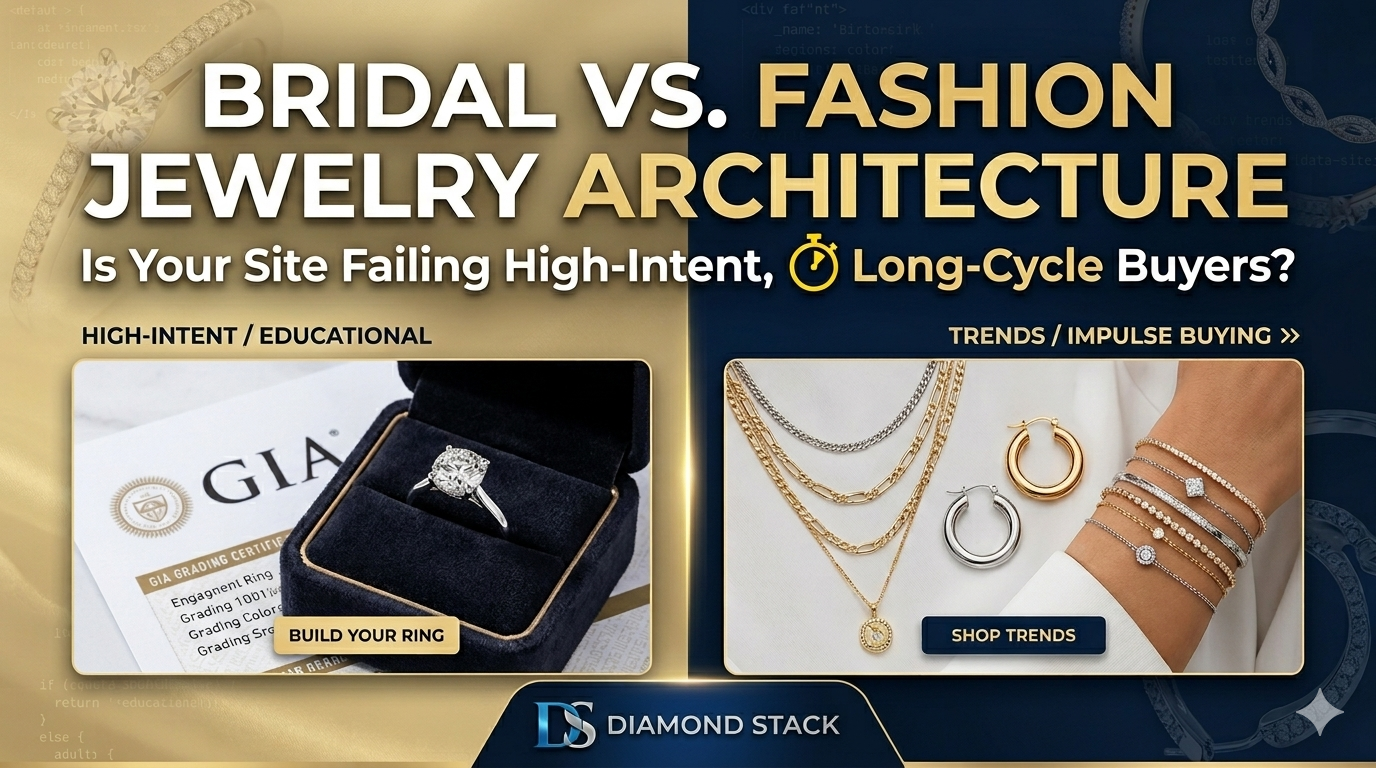
- The Fashion Buyer: They are browsing for style, trends, and self-expression. Their journey is visual and often impulsive. They want to see the “vibe,” quickly add to cart, and check out.
- The Bridal Buyer: This is a high-intent, long-cycle purchase. This buyer is doing deep research. They are comparing specs, worrying about certification (GIA/IGI), and agonizing over the difference between a radiant cut and an emerald cut. They are looking for trust, authority, and deep technical details.
When you mix these two journeys in a single, cluttered menu or search results page, you lose both. Your fashion buyers get bored by the technical depth, and your bridal buyers get overwhelmed—or worse, insulted—by the lack of clarity.
The Architecture Problem: The “Department Store” vs. “Boutique”
Most WooCommerce sites act like a crowded department store. When a bridal shopper enters, they are bombarded by pop-ups for 15% off fashion earrings. This destroys the premium feel required for a five-figure engagement ring purchase.
If your technical architecture doesn’t allow for Strategic Siloing, you are missing the opportunity to change the “atmosphere” of the site based on intent:
- Navigational Separation: The bridal section of your site should prioritize education and configuration (e.g., “Build Your Ring”), whereas the fashion section should prioritize collection-based browsing.
- Conversion Funnels: A bridal shopper needs a “Concierge” path—access to gemologists, appointment booking, and financing options. A fashion shopper needs a “Quick Buy” path. If these are buried under the same site-wide navigation, you are forcing the user to dig for the experience they want.
- Content Prioritization: Your technical SEO and site architecture should serve the bridal buyer technical specs, while the fashion buyer should be served high-end lifestyle photography.
The Data/UX Connection
When you align your site architecture with the intent of the buyer, the data follows. A refined, siloed navigation leads to higher dwell time because the content being served is relevant to the user’s specific goal.
Conversely, when a user has to “work” to find the bridal engagement ring tools amidst fashion lifestyle content, your bounce rate climbs. Google notices this behavior; when users leave quickly, it signals that your site isn’t providing the value they expect, which can hurt your organic rankings for your highest-margin products.
Is Your Site Built for Scale or Just Display?
Your website shouldn’t just be a digital catalog; it should be a digital sales funnel that recognizes the difference between a quick fashion purchase and a life-changing engagement ring.
At Diamond Stack, we don’t just “design” websites; we architect high-performance digital boutiques. We help you implement the silos and navigation structures that treat your bridal buyers like the high-intent clients they are, while keeping your fashion sales streamlined and efficient.
Is your site architecture helping or hurting your revenue?
Let’s find out. Click here to schedule your Site Architecture Review with Diamond Stack. We’ll analyze your current setup and show you exactly where you can silo your content to increase your conversion rates for both bridal and fashion categories.