
From Observation to Framework — How 90 Days of Logging Becomes Your Team’s Shared Language
Erwee Coetzee
Diamond Stack
Cape Town, South Africa
Three months have passed.
You’ve been keeping your Daily Provenance Log. Not perfectly—maybe you’ve logged 60–80 decisions. But the habit is there. It’s automatic. You barely think about it anymore.
Your team has been reading it. Asking questions. Watching how you think.
Now comes the crucial next step: articulation.
You and your lead artisan need to sit down together and ask: What’s the pattern in these 80 decisions? What’s the logic? What would someone need to understand to make decisions like you make them?
This is Step 2 of the externalisation framework from Post 4. But now you have something concrete to work with. Not guesses. Not abstract principles. Actual data from your actual decision-making.
The Stone Selection Framework Case Study
Let’s say you’ve been logging your stone selections for three months. You open your log and look back at 30 stone decisions.
You chose the Mozambique tourmaline over the Zambian five times. You always pick warmer tones for Q1 (collector season). You passed on three “technically perfect” stones because they felt “dead.” You selected two unusual stones that seemed risky but both sold in the first week.
Now sit down with Mthembu and extract the logic:
“Mthembu, look at these 30 decisions. Let’s build a framework together. What do you notice about which stones I selected?”
Mthembu reads. He sees the warmth preference in Q1. He notices you rejected technical perfection twice. He asks: “Why did you pick that unusual stone in July when it seemed risky?”
You answer: “Because I know our collector base is sophisticated. They want to discover something they didn’t expect. But only if it has presence—that intensity that makes you stop and look.”
Together, you build this:
Stone Selection Framework
Criterion 1: Collector Psychology
Which customer profile needs this stone? Investor (wants rarity + market trend), Wearer (wants beauty + comfort), Connoisseur (wants discovery + presence)?
Your pattern: You prioritise connoisseur over all other profiles. You select for the person who will appreciate the story, not just the specs.
Criterion 2: Presence
Does the stone have intensity? Can you sense it from across the room, or do you have to look closely?
Your pattern: Technical specs matter less than presence. A “dead” VS stone loses every time to a slightly included stone that catches light.
Criterion 3: Seasonal Fit
Q1 (Jan-Mar): Collector season—warmer, richer tones. Q2 (Apr-Jun): Mixed season—flexibility. Q3-Q4: Investment season—trends-based selection.
Your pattern: You shift selection criteria by quarter based on who’s shopping.
Criterion 4: Market Position
Is this a discovery stone (surprising, risky) or an expected stone (safe, reliable)?
Your pattern: 70% expected, 30% discovery. But discovery stones need presence. Never risky without presence.
That’s not a rulebook. That’s a thinking framework. Mthembu can now understand not just what you choose, but why you choose it.
Why This Works (The Science)
Nonaka and Takeuchi (1995) called this knowledge codification. You’re taking tacit knowledge (intuition, judgment, “just knowing”) and turning it into explicit knowledge (written criteria, shareable logic).
But here’s what makes this different from a rulebook: it’s emergent, not prescribed.
Feldman and Pentland (2003) distinguish between the ostensive (the prescribed rule) and the performative (how people actually do it). The framework you build together is the ostensive version. But it stays connected to the performative—the actual decisions.
Because Mthembu has watched 80 of your decisions through the log, he knows that “presence” isn’t rigid. It’s contextual. A stone that has presence in Q1 might be different from presence in Q3. He understands the logic, not just the letter of the law.
The Conversation Structure
This doesn’t happen in one sitting. Block out 2–3 hours over multiple sessions. Here’s how:
Session 1 (60 minutes): Observation
You bring the log. Together, you read 20–30 recent decisions. Mthembu takes notes on patterns he sees. You don’t explain—just read. Let him form impressions.
Session 2 (60 minutes): Dialogue
Mthembu asks: “I noticed you picked warm tones in the first three months. Why?” You explain. He asks follow-up questions. You dig deeper into your reasoning. You both start to see the pattern.
Session 3 (60 minutes): Codification
Together, you write the framework. Not perfect—it’s rough. But it’s shared. Mthembu has helped build it, so he understands it deeply.
Now he has the permission and the language to practice.
Applying This to Other Decisions
This case study is stone selection. But the methodology applies everywhere:
Design Direction: Look at your log for design decisions. Which designs sold? Which didn’t? What’s the pattern? Simplicity vs. complexity? Trend vs. timeless? Build a framework together.
Pricing: Review 20 pricing decisions. When did you price premium? When did you compromise? Was there a logic, or was it intuitive? Articulate it together.
Customer Conversation: Look at customer interaction logs. Which conversations closed sales? Which didn’t? What questions did you ask? What made the difference? Build a framework for how you listen.
Team Decisions: Which people did you hire? Which ones thrived? Which didn’t? What were you looking for? Articulate your hiring framework.
The same structure applies to every decision category in your business.
What Happens Next
Once the framework is articulated (Step 2 of externalisation), you move to Step 3: Practice and Calibration.
Mthembu starts making stone selections using the framework. Maybe 30% of the sourcing. You review every selection. Some will be brilliant. Some will miss the mark. When they miss, you calibrate together.
“You selected this stone based on presence—good thinking. But I’m noticing it sits in the warm zone where we already have coverage. Let’s talk about seasonal fit. How does your choice change if we think about Q2 coming up?”
This is how judgment develops. Not from rules. From practice within a framework, with calibrated feedback.
By month 6 of the externalisation process, Mthembu isn’t asking “Is this right?” anymore. He’s asking “What am I missing?” He’s internalized the framework and is learning to adapt it.
The Shared Language Advantage
Here’s what’s powerful about building the framework together: it’s now shared language, not your language that he’s trying to learn.
When you say “That stone lacks presence,” Mthembu knows what you mean. He participated in defining it. He has context. He can push back: “Actually, I think it has presence—look how it catches the shop light.”
This is the difference between a framework you imposed and a framework you built together. One creates compliance. The other creates partnership.
And partnership is where real empowerment lives.
Your Action This Week
If you’ve been keeping your Daily Provenance Log since Post 5 went live (three weeks ago), you should have 40–60 logged decisions by now.
This week, pick one decision category—stone selection, design direction, pricing, or customer conversation. Print out or gather 20–30 examples from your log.
Don’t articulate the framework yet. Just look. What patterns do you see?
Write down three observations. That’s your starting point for the conversation with your team next week.
Post 7 Preview
Post 6 is about turning your logs into shared language. Step 2 of externalisation.
Post 7 will shift to something different: cognitive architecture. It’s not about externalising more of your knowledge. It’s about building a team that doesn’t need to clone your knowledge—because they have different strengths that complement yours.
Herrmann (1996) developed the Whole Brain model showing that different people think in different ways: analytical, operational, interpersonal, visionary. The most powerful teams don’t have four clones of the founder. They have people with different cognitive styles who think together.
Post 7 will show you how to build that.
Research & References
Nonaka, I., & Takeuchi, H. (1995). The knowledge-creating company: How Japanese companies create the dynamics of innovation. Oxford University Press.
On knowledge codification and the conversion of tacit knowledge into explicit knowledge. The framework articulation process is knowledge codification in action.
Feldman, M. S., & Pentland, B. T. (2003). Reconceptualizing organizational routines as a source of flexibility and change. Administrative Science Quarterly, 48(1), 94–118.
The distinction between ostensive (prescribed) and performative (enacted) routines. The framework is ostensive; the actual decisions are performative. Learning happens in the dialogue between them.
Spreitzer, G. M. (1995). Psychological empowerment in the workplace: Dimensions, measurement, and validation. Academy of Management Journal, 38(5), 1442–1465.
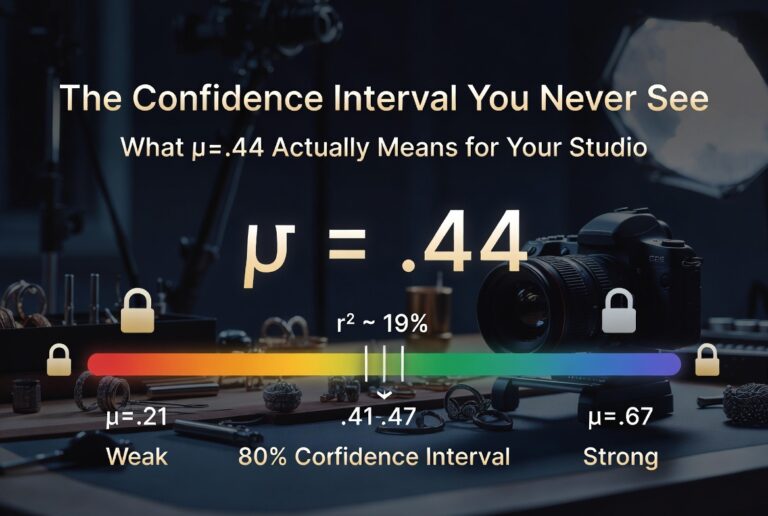
On psychological empowerment and the impact of shared frameworks on team capability. When a framework is built together, team members report higher empowerment and autonomy (ρ = .44 for team performance).