
Why I Built the Coetzee Convergence Framework (And Why It Might Feel Like the First Time Someone Actually Gets What Running a Jewellery Studio Really Feels Like)
Hey, if you’re reading this, there’s a good chance you’re a jewellery studio owner who’s damn good at what you do — but you’re quietly exhausted.
I know that feeling. I’ve lived it.
There are days when the bench looks perfect, the client is thrilled, and everything sparkles exactly the way it should. And then there are the other days. The ones where you’re the only one who can spot the difference between “good enough” and “this is what we’re known for.” The days where you catch yourself thinking: If I have to check every single piece one more time, I’m going to lose my mind.
You love the craft. You love the clients who trust you with something meaningful. But deep down you’re carrying this quiet fear that the whole studio is one missed detail, one burnt-out week, or one key person leaving away from slipping.
That’s exactly where I was a few years ago.
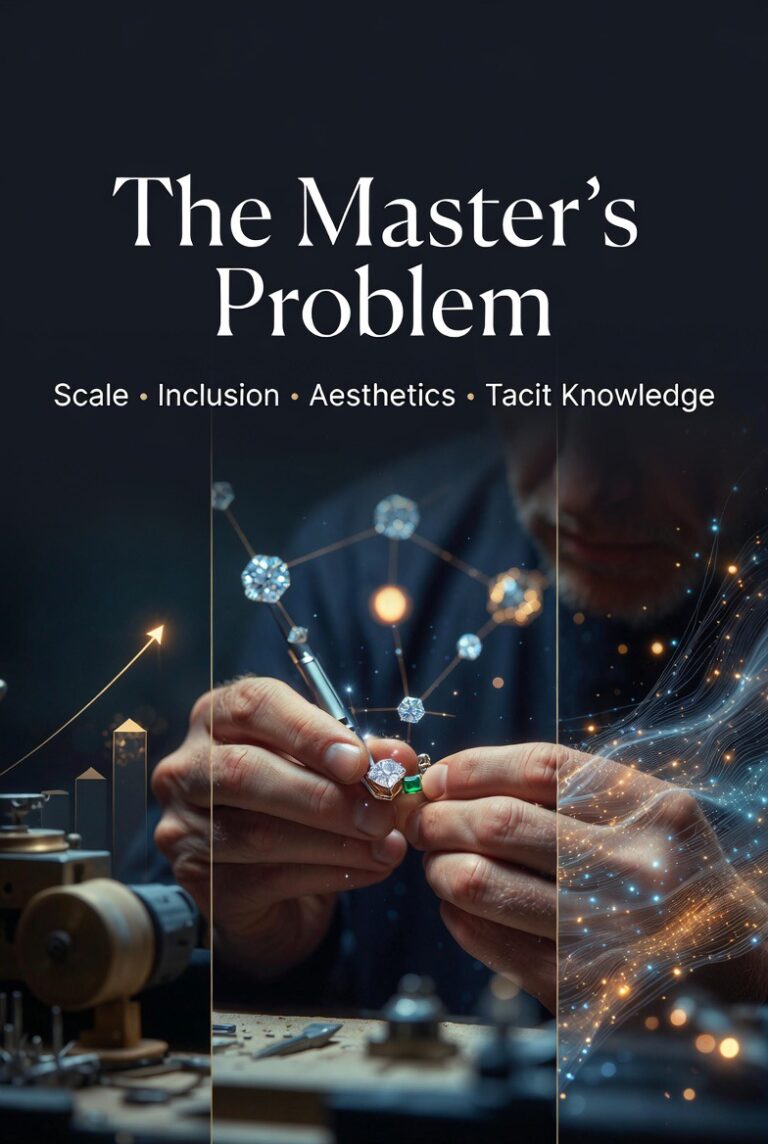
I’d built a studio that could deliver beautiful work, but I was still the bottleneck. Quality lived in my eye and my hands. Team members were talented, but excellence wasn’t automatic — it was heroic. And when we tried to grow, things started to feel… thinner. Less special. The very soul of the atelier that clients paid a premium for started feeling harder to protect.
I got tired of pretending that “working harder” or hiring another talented person was the answer. I also got tired of the hype — all the “10x your studio” talk that never seemed to fit the reality of working with precious materials, nervous brides, and the slow, precise rhythm that real jewellery demands.
So I started building something different.
Introducing the Coetzee Convergence Framework
I call it the Coetzee Convergence Framework (CCF).
It’s not another trendy business system. It’s the operating system I wish I’d had years earlier — one that finally lets a jewellery studio scale without selling its soul or turning into a factory.
At its heart, the CCF brings together three pillars that every serious studio owner already cares about, but usually tries to manage in isolation:
- Empowerment Science — So your team doesn’t just “help”… they actually own the work with confidence and accountability.
- Habit Architecture — So excellence stops being an exhausting daily battle and becomes the default way things get done.
- Blockchain Provenance — So the integrity and story behind every piece become visible, verifiable, and financially valuable instead of just nice marketing words.
When these three things converge properly, something powerful happens. The subjective “my eye knows best” part of running a studio starts turning into objective, repeatable strength. You protect the premium your clients are willing to pay while finally getting some breathing room.
The Moment Everything Clicked for Me
I still remember the specific afternoon that pushed me to formalise this.
We had a big commission — beautiful custom work with meaningful stones. Everything was on track until a small handoff between team members created a tiny mismatch that only I would have caught. Fixing it cost us time, stress, and a bit of that quiet pride we all chase.
In that moment I realised: I don’t want to be the quality police forever. I didn’t want my team to feel like they were always one step away from disappointing me. And I definitely didn’t want to keep trading my own peace of mind for the ability to deliver at the level our clients deserved.
That’s when I started mapping out the CCF properly. Not as theory, but as the practical convergence of things that actually work in a real atelier.
Through the framework, we move the standard from your personal “eye” to a forensic, objective ledger that everyone can see and contribute to. We use habit architecture to make the right processes feel natural instead of forced. And we turn provenance from a nice story into real structural capital — something that shows up in how the business is valued, not just in pretty photos.
The result? You stop being the single point of failure. Your team gets to do their best work without constant oversight. And clients feel even more confident in the premium they’re paying, because the integrity is now provable, not just promised.
This Isn’t About Becoming “Less Personal”
I know what you might be thinking — and I’ve had the same worry.
“Systems will kill the soul of the studio.”
I promise you, the CCF was built to protect that soul, not replace it. It’s the opposite of turning your atelier into a production line. It’s about making the craft sustainable so the magic can keep happening for decades, not just while you’re young and willing to grind.
It’s about moving from founder-dependent value to system-supported value — while keeping the human touch that makes your work special.
Where We Are Now
The Coetzee Convergence Framework is the operating system behind everything we’re deploying for studios right now on Diamond Stack. You’ll see its influence in how we talk about real empowerment (not just motivation speeches), sustainable habits, and turning provenance into an actual asset rather than a marketing line.
It’s still evolving — because real studios are living, breathing things — but the core idea is simple: when empowerment, habits, and verifiable integrity converge, you get something stronger than any one of them alone.
You get a studio that can grow without losing what makes it worth growing in the first place.
You’re Not Alone in This
If any of this resonates — if you’ve ever felt the weight of being the only one who truly “gets” the standard, or if you’re tired of choosing between growth and quality — I want you to know you’re in good company.
This framework wasn’t built in some fancy consultant’s office. It came from the bench, from late nights, from loving the work too much to let it burn out.
If you’d like to explore whether the CCF thinking could fit your studio, I’d be happy to have a short, no-pressure conversation. Just reply to this post or reach out through the site. Sometimes the biggest relief is simply realising someone else has been wrestling with the same contradictions you have.
In the meantime, I’ll keep sharing the deployment notes and the real lessons as we roll this out. Because the goal isn’t to sell you a framework. It’s to help more studio owners like us build something that lasts — and still feels good to wake up to every morning.
Thanks for reading. I’d love to hear your thoughts in the comments.
Warmly,
Erwee Coetzee
Diamond Stack