The Algorithmic Atelier: Synthesizing Heritage Craftsmanship with Digital Infrastructure in the Luxury Gemstone Market
Abstract
The luxury gemstone industry is currently undergoing a radical paradigm shift, transitioning from a reliance on opaque, legacy-based trust systems to a transparent, “algorithmic” model of value creation. This article explores the concept of the Algorithmic Atelier—a framework where traditional artisanry is augmented by a high-velocity digital infrastructure. By integrating blockchain-based provenance, AI-driven grading, and smart contract architecture, the industry is effectively resolving the “Market for Lemons” problem (Akerlof, 1970) through information symmetry. This study examines how these technologies create a “flywheel effect,” where each digital component enhances the value and authenticity of the physical asset.
Introduction: The Evolution of the Atelier
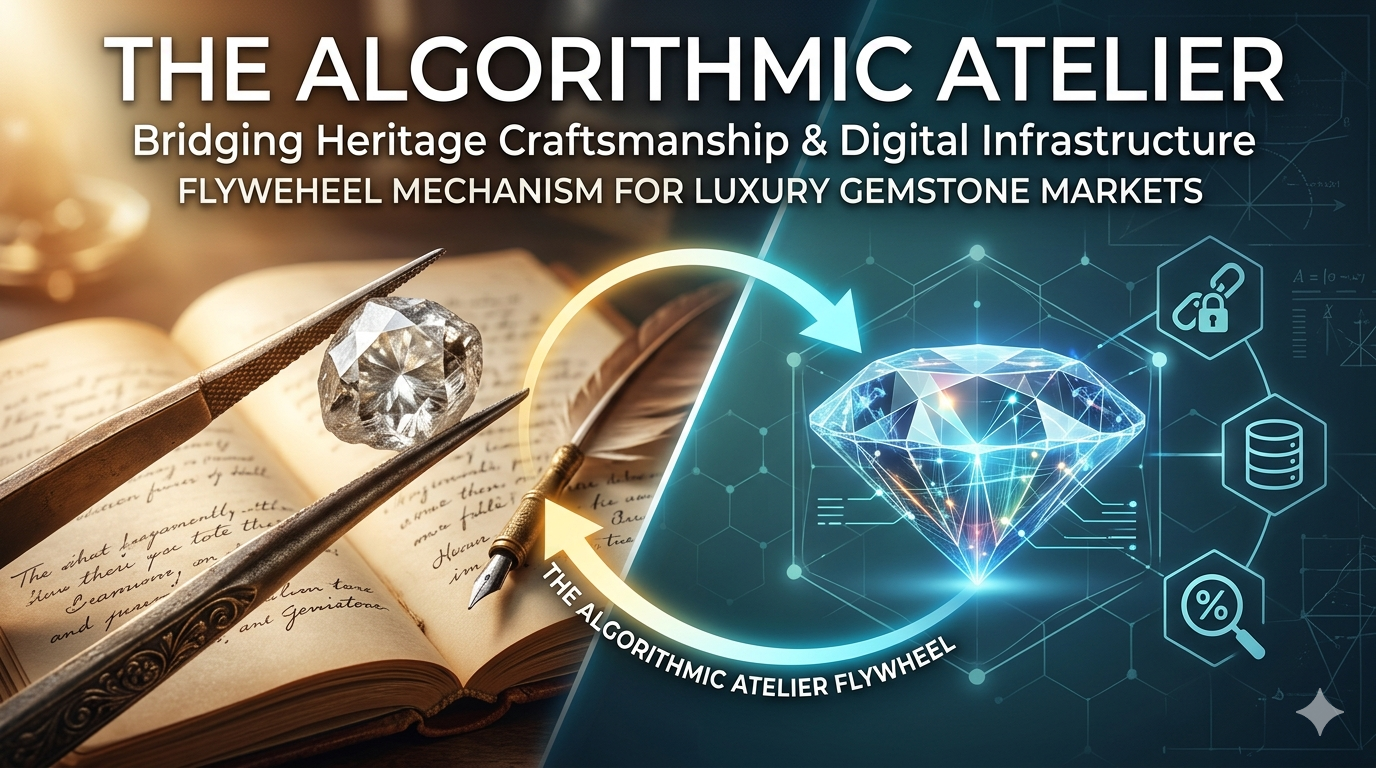
Historically, the luxury atelier was defined by physical exclusivity and the specialized knowledge of the master craftsman. However, in the modern era, “craftsmanship” is being redefined to include the digital stewardship of an asset’s data. The Algorithmic Atelier represents the synthesis of these two worlds: Heritage Craftsmanship, characterized by tactile expertise and antique tools, and Digital Infrastructure, characterized by decentralized ledgers and neural networks.
The Problem of Information Asymmetry
The gemstone market has long suffered from information asymmetry, a condition where sellers possess more information about a product’s quality and origin than buyers. In economic terms, this creates a “Market for Lemons” (Akerlof, 1970). Without verifiable proof of ethical sourcing or precise quality grading, high-value goods can be undervalued by a skeptical market.
The Algorithmic Atelier addresses this by replacing subjective “paper-based” trust with objective “mathematical” trust.
The Pillars of Digital Infrastructure
The integration of advanced technologies creates a robust digital shell around the physical gemstone:
- Blockchain Provenance Networks: Utilizing decentralized ledgers to create an immutable “Mine to Merchant Journey.” Each transition in the supply chain is timestamped and cryptographically secured, ensuring that “Product Passports” cannot be altered or forged.
- AI and Generative Design: Artificial Intelligence is now utilized both in the creation phase—optimizing the cut of a diamond for maximum brilliance—and in the grading phase, where machine learning models provide “4Cs” data with a level of consistency unattainable by human eyes alone.
- Smart Contracts: These self-executing protocols automate the transfer of ownership and royalty payments, ensuring that ethical sourcing standards are met before a transaction can be finalized.
The Flywheel Mechanism: Complementarity in Action
Applying Milgrom and Roberts’ (1990) Complementarity Theory, we observe that the components of the Algorithmic Atelier are mutually reinforcing. The presence of a blockchain ledger makes the AI-grading data more valuable because it is securely stored; the AI-grading makes the blockchain record more valuable because the data it contains is highly accurate.
This creates a flywheel effect:
- Transparency increases consumer trust.
- Trust drives higher market premiums for verified assets.
- Premiums incentivize further investment in digital infrastructure.
- Investment leads to even greater technological precision and market dominance.
Conclusion
The Algorithmic Atelier is not merely a technological upgrade; it is a fundamental re-engineering of luxury economics. By bridging the gap between the physical and digital, luxury brands can provide the Information Symmetry that modern consumers—particularly Gen Z and Millennials—demand. As 73% of consumers now prioritize transparency in their purchasing decisions, the transition to an algorithmic model is no longer optional; it is an industrial inevitability.
References
- Akerlof, G. A. (1970). The Market for “Lemons”: Quality Uncertainty and the Market Mechanism. The Quarterly Journal of Economics, 84(3), 488–500.
- Collins, J. (2001). Good to Great: Why Some Companies Make the Leap… and Others Don’t. HarperBusiness.
- Milgrom, P., & Roberts, J. (1990). The Economics of Modern Manufacturing: Technology, Strategy, and Organization. The American Economic Review, 80(3), 511–528.
- De Beers Group. (2024). The Diamond Insight Report: The Impact of Blockchain on Consumer Trust.
- LVMH Aura Blockchain Consortium. (2025). Digital Product Passports and the Future of Luxury Traceability.