The Anatomy of a High-Converting Consultation Form for Custom Jewelers
Look at the “Contact Us” page on your jewelry website right now. If it consists of three blank boxes asking for Name, Email, and Message, you are actively losing high-value custom commissions.
For a bespoke jeweler, a generic contact form is a massive conversion killer. It creates two distinct, equally damaging problems:
- The Blank Page Paralysis: When a client wants a custom engagement ring, they often don’t know what information you need to give them a quote. Staring at a blank “Message” box creates friction. They get overwhelmed, tell themselves they will “email you later when they have more details,” and then leave your site forever.
- The Unqualified Inbox: A generic form invites vague inquiries like, “How much for a custom diamond ring?” This forces you into a lengthy, exhausting back-and-forth email chain just to figure out what they want, only to discover their budget is a fraction of your starting price.
To capture high-intent clients and protect your time, you must stop using generic contact forms and start using a Multi-Step Pre-Qualification Consultation Form.
Here is the exact anatomy of a consultation form designed to filter out window-shoppers and deliver ready-to-buy clients directly to your inbox.
The Psychology of the Multi-Step Form
Many jewelers fear that a longer form will result in fewer leads. This is fundamentally true, but strategically necessary.
You do not want more leads; you want better leads.
By breaking the inquiry down into a multi-step process, you employ the psychology of “micro-commitments.” A user is much more likely to click a button that says “Ring” than they are to type out a 500-word essay about their dream design. Once they click that first button, they are invested in completing the process.
The Step-by-Step Anatomy
A high-converting custom jewelry form should feel less like a test and more like a collaborative design questionnaire.
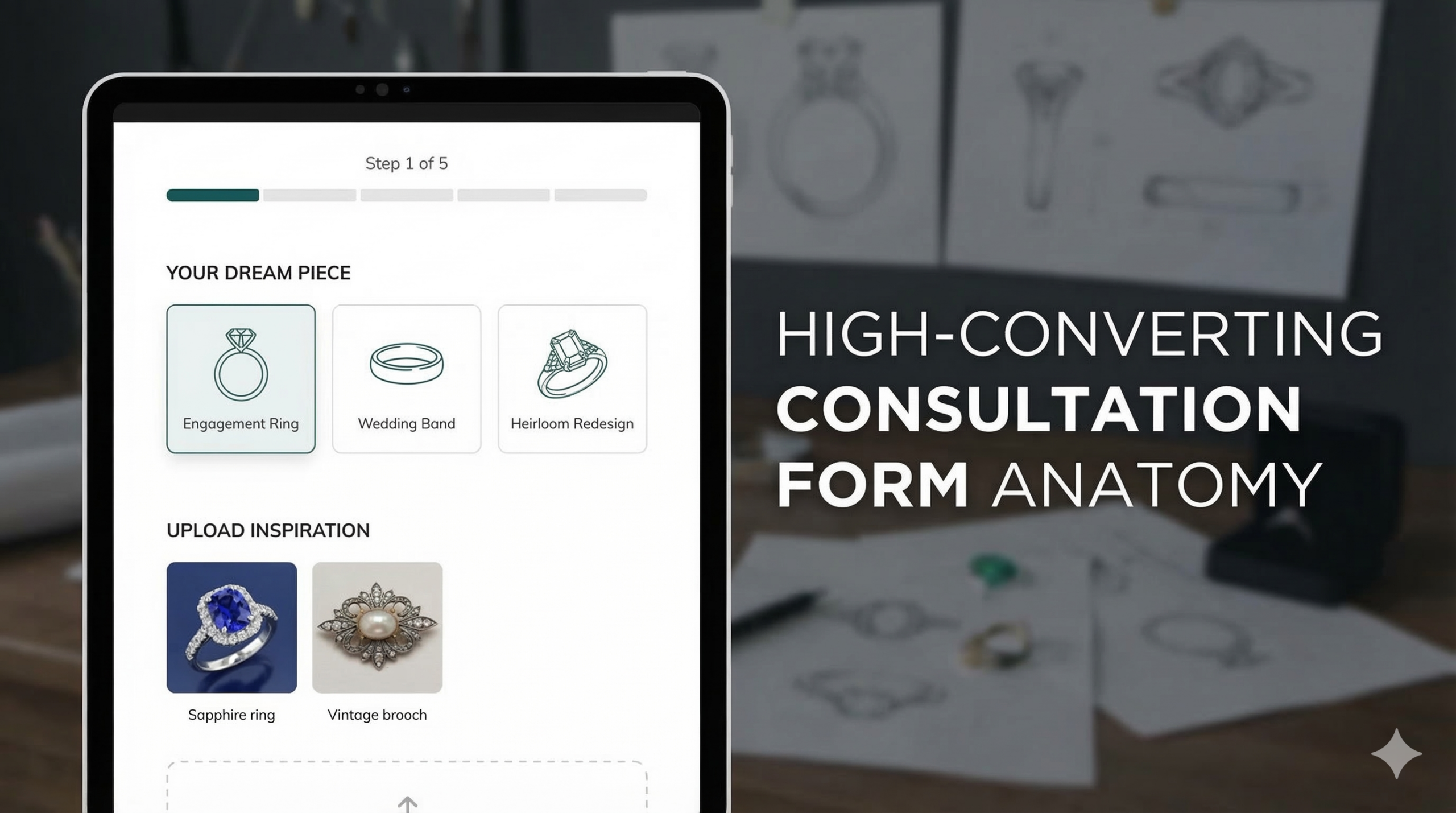
Step 1: The Vision & Inspiration
Start with the fun part. What are they dreaming of?
- The Item Type: Use visual buttons or dropdowns (e.g., Engagement Ring, Wedding Band, Heirloom Redesign, Necklace).
- The Inspiration Upload: Allow them to upload up to 3 reference images or paste a link to a Pinterest board. Visuals are the fastest way to align your understanding with their expectations.
Step 2: The Timeline & Occasion
Knowing the deadline is critical for custom work.
- The Occasion: (e.g., Proposal, Anniversary, Just Because).
- The Deadline: “Do you have a specific date you need this piece by?” (Provide a calendar picker). If their timeline is two weeks and your bespoke process takes eight, you instantly know how to manage the lead.
Step 3: Materials & Sourcing
This section helps you gauge the complexity of the job.
- Metal Preferences: Give them options to check (Platinum, 18k Yellow Gold, 14k Rose Gold, Unsure).
- The Centerpiece: What are they looking for? (Natural Diamond, Lab-Grown Diamond, Sapphire, Other, Unsure).
- Heirloom Elements: “Will you be providing any heirloom stones or metal to incorporate into the design?” (Yes/No). This is a vital question for bespoke jewelers, as redesigning heirlooms is a highly sought-after and specific service.
Step 4: The Budget Tier (The Filter)
This is the most crucial step for qualifying the lead and protecting your time. Never ask for an exact number; ask for a range.
Frame the question around design parameters: “To help us understand the design possibilities and stone options available to you, what is your anticipated investment range?”
Provide dropdown tiers that align with your actual pricing structure. For example:
- Under $3,000 (If your minimum is $5k, this immediately flags an unqualified lead)
- $3,000 – $5,000
- $5,000 – $10,000
- $10,000 – $20,000
- $20,000+
Step 5: Contact Details (The Final Step)
Notice that we ask for their name and email last.
If you ask for personal contact information upfront, users get defensive. If you ask for it at the end of a fun, engaging questionnaire about their dream ring, they are highly invested and happy to hand over their email address to receive your expert advice.
Include fields for:
- First and Last Name
- Email Address
- Phone Number (Optional, but highly recommended for text-based follow-ups)
- Preferred Method of Contact (Email, Phone Call, WhatsApp)
The Post-Submission Experience
The form’s job doesn’t end when they hit submit.
Instead of a generic “Thanks, we will be in touch” pop-up, redirect them to a dedicated “Thank You” page. This page should outline exactly what happens next (e.g., “Our lead designer will review your vision and reach out within 48 hours to schedule your consultation”).
You can also use this page to link to your “Custom Process” page or your FAQ, keeping them engaged with your brand while they wait for your response.
Stop losing commissions to poorly designed contact pages. If your website isn’t actively qualifying your leads, it is working against you. See how we build lead-first architectures for bespoke jewelers by exploring our Digital Strategy for Custom & Bespoke Jewelers services.