Making Diamonds from Dust: The Entrepreneurial Art of Bricolage
The light over the Atlantic has a specific, sharp clarity this morning, the kind that makes the textures of the Cape Town coastline look almost hyper-real. Inside the studio, there is a different kind of hum—the rhythmic sound of filing, the hiss of the torch, and the quiet, intense concentration of the bench.
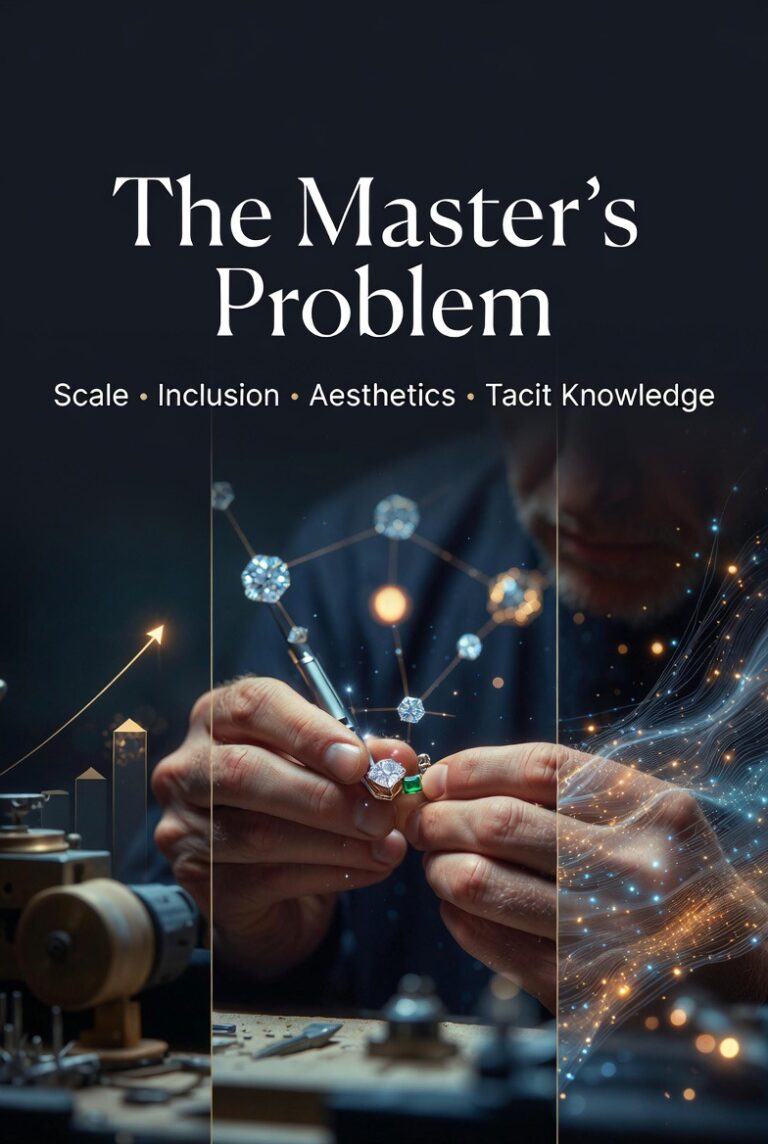
To the untrained eye, a jeweler’s workbench at the end of a long day looks like a mess: tiny offcuts of gold wire, a sprinkle of silver dust, and a few “abandoned” sketches. But my pattern-recognition firmware sees something else. It sees a resource map. It sees Bricolage.
The Logic of “Making Do”
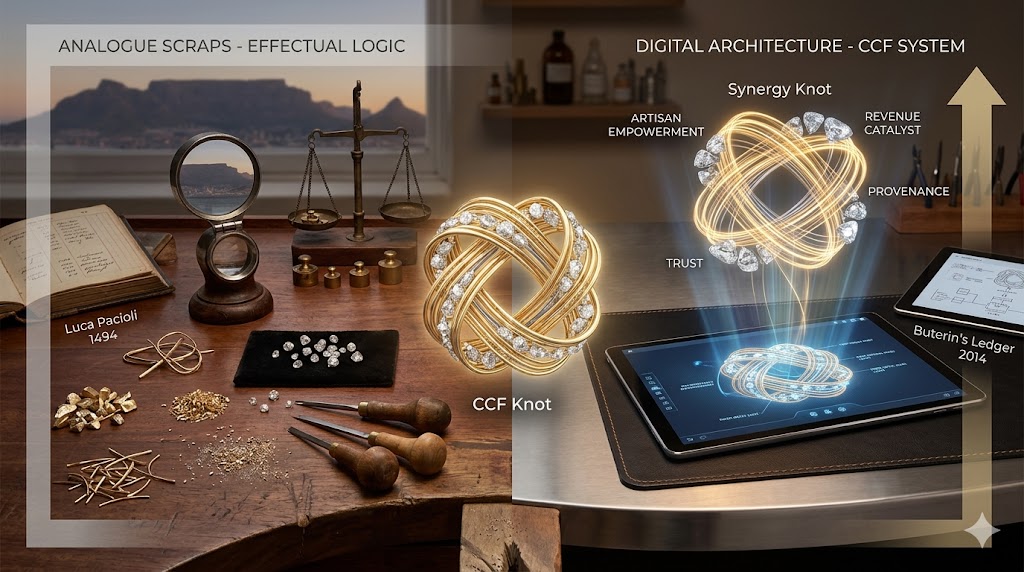
In 2001, Saras Sarasvathy introduced a concept that changed how we think about entrepreneurship: Effectuation. Most business schools teach “Causal Logic”—you start with a goal and then go find the resources to achieve it. But artisans don’t work that way. Artisans use “Effectual Logic.” They look at the tools they have, the scrap in the tray, and the skills of the person sitting next to them, and they ask: “What can I create with this?”
This is the art of Bricolage—the ability to create something from nothing, or more accurately, from “whatever is at hand.”
For the neurodivergent brain, Bricolage is a natural language. We don’t see “scraps”; we see components. We don’t see “fragmented data”; we see the beginning of a high-value system. When a studio is struggling, the typical advice is to wait for “perfect market conditions” or a massive injection of capital. But the Bricoleur knows that the next big opportunity is usually hidden in plain sight, buried in the underutilised skills of their staff or the “hidden” provenance data of their existing stone inventory.
Scaling the Creative Chaos
The problem with pure Bricolage is that it’s hard to scale. It’s a brilliant, messy, creative process that usually lives inside the founder’s head. If the founder leaves the room, the “magic” stops happening.
This is where the Coetzee Convergence Framework (CCF) serves as the essential architecture. It takes that raw, effectual energy and gives it a forensic standard.
By implementing the Diamond Stack’s blockchain-verified logs, we aren’t stifling the artisan’s creativity; we are documenting it. We are taking the “dust”—the small, incremental improvements, the unique heat treatments, the experimental settings—and turning them into a permanent record of value. We are taking the “making do” and turning it into “making sure.”
From Scraps to Systems
When you stop waiting for the perfect moment and start looking at your studio through the lens of Effectuation, the world changes. You realise that your most valuable “scraps” aren’t just the physical gold in the leather apron; they are the 200 citations of deep research, the unique heritage of your workshop, and the immutable trust you’ve built with your clients.
The CCF allows you to take these fragments and weave them into a “complex knot” that no competitor can untie. It turns your daily bricolage into a scalable, machine-readable asset.
In the luxury market of 2026, the brands that win aren’t the ones with the biggest budgets. They are the ones who know how to make diamonds from dust—turning the raw materials of their daily labour into a verified, high-velocity engine of growth.
The pattern is there. The tools are on the bench. The only question is: what will you build with them today?